
Product Guides
Oil Filter Sourcing Guide for Aftermarket Distributors
A structured way to prepare an oil filter range, review references and move from supplier screening to SKU-level confirmation.

Answer first
Answer first
Aftermarket distributors should source oil filters through a documented product-list and verification process. Begin with the target market, OE or cross-reference inputs, quantities and packaging needs; then confirm product identity, application evidence, technical requirements, samples and supply terms at SKU level. Cross-references help discovery but should not be treated as automatic proof of identical fit or performance.
Key facts
Key points for buyer review
- An oil filter sourcing request is more actionable when it includes the target market, product list, quantities and packaging needs.
- Reference numbers support candidate identification but require controlled review before approval.
- Technical and application confirmation should be managed at SKU level.
- Public SKU links are limited to products that pass publication and verification gates.
What oil filter buyers should confirm
Oil filter sourcing should begin with a controlled product list and end with SKU-level approval. Buyers need to confirm product identity, application inputs, dimensions and interfaces, construction, sealing-related requirements, category-appropriate evidence, packaging and supply terms. An OE or cross-reference number can identify a candidate, but it does not prove identical fit, design or performance.
For aftermarket distributors, sourcing also includes range planning. A technically acceptable filter can still create inventory or catalog risk when reference data, MOQ, demand and packaging are not aligned.
Prepare an oil filter product list
The supplier review is more effective when the buyer preserves original data instead of sending an unstructured list of numbers. Include:
- Buyer SKU or catalog code.
- OE or aftermarket reference exactly as received.
- Source of the reference.
- Target market and available application information.
- Expected quantity by SKU and order frequency.
- Neutral or private label packaging requirement.
- Existing drawing, specification or approved sample where available.
- Required sample, test, inspection and documentation evidence.
Use the OE and cross-reference guide to separate candidate matching from application approval. If source data conflicts, retain both values and record the question rather than silently choosing one.
Identify the construction
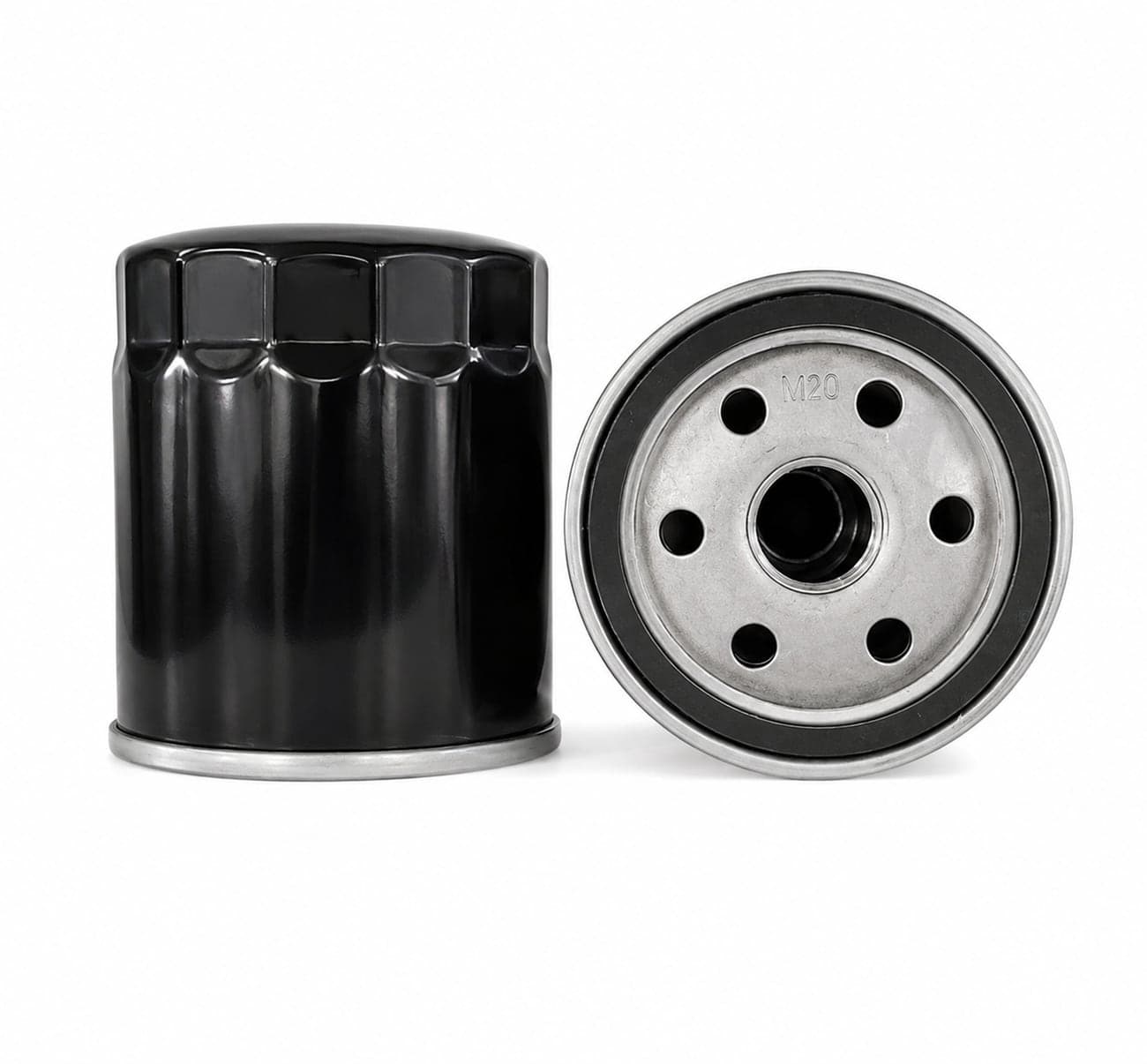
“Oil filter” covers different constructions. A spin-on filter and cartridge element do not share one universal checklist. First identify the product type and relevant interfaces.
| Review area | Spin-on considerations | Cartridge considerations | Buyer evidence |
|---|---|---|---|
| Identity | Shell assembly and reference mapping | Element and cap/end construction | Controlled SKU and sample |
| Interfaces | Thread, gasket and mounting surface | Dimensions, seals and housing fit | Drawing or measured sample |
| Internal design | Media pack, center tube and valves where applicable | Media pack, support and end features | Specification and approved construction |
| Integrity | Housing and sealing interfaces | Bonding and seal interfaces | Agreed verification evidence |
| Packaging | Thread, shell and gasket protection | Deformation and contamination protection | Approved pack sample |
Not every component or check applies to every SKU. Buyer and supplier should identify applicable characteristics from the actual design.
Review dimensions and interfaces
Dimensions should be compared with the approved requirement, not only with another catalog. Depending on construction, relevant fields may include overall height, outside diameter, thread designation, gasket dimensions, mounting surface, cartridge inside diameter, end geometry and seal position.
A dimensional match is important but insufficient. Two products can share outer dimensions while using different internal construction or application requirements. The approved data should identify critical measurements and how they are checked.
Evaluate media and internal design
Filter media should be selected as part of the complete design. Buyers may review media family, construction, pleat stability, usable area and compatibility with the intended lubricant and operating conditions. Cellulose or synthetic names do not automatically establish finished-filter performance.
The filter media selection guide explains how to compare options without assuming one material is universally superior. Where efficiency, pressure drop or dirt-holding claims are required, ask for the method, conditions, specimen and applicability to the proposed SKU.
Internal components should be evaluated according to product design. A valve or spring arrangement that applies to one reference may not apply to another. Avoid creating a universal feature list and treating every difference as a defect.
Define sealing and leakage requirements
Oil filters use sealing interfaces that should be controlled for the intended design. For spin-on products, thread, gasket, shell and assembly may be relevant. Cartridge filters can have different seal and housing interfaces.
If leakage or pressure-related verification is required, specify:
- Product construction and characteristic being evaluated.
- Test medium and equipment.
- Pressure or operating condition.
- Duration and stabilization conditions.
- Acceptance criteria.
- Sampling or unit-level scope.
- Record and release responsibility.
Do not assume one leakage method applies to every oil filter. The oil filter leakage verification guide provides a focused framework. The supplier should confirm method availability and applicability before approval.
Read test reports in context
A test report should identify product, revision, method, conditions and results. Buyers should determine whether it represents the proposed filter or a related construction. A report title or pass statement does not establish equivalence.
Ask which SKU and sample the report represents, whether the finished filter or material was tested, which method and edition applied, what flow or fluid conditions were used, what limit was applied and whether the result can extend to other references.
Use the test report review guide for structured interpretation. Required testing should be agreed by application and contract; not every test applies to every SKU.
Approve the sample baseline
An oil filter sample should be identified by SKU, construction, revision and packaging. Review workmanship, dimensions, interfaces, internal features where required and applicable evidence.
Record which characteristics the sample approves. A visual sample cannot control a hidden construction unless a specification or approval record identifies it. The sample approval checklist can be used before production.
For repeat orders, agree how material, component, process and packaging changes will be notified. Production should remain connected to the approved baseline through records rather than memory or an unlabeled sample.
Plan the distributor range
Oil filter ranges combine high-demand references and long-tail coverage. More SKUs can improve breadth but increase stock, data and reorder complexity.
Classify the list into core references supported by recurring demand, regular references with stable movement, expansion references supported by verified applications, unconfirmed candidates and obsolete or duplicate references.
Compare per-SKU production constraints with buyer demand. The MOQ and inventory planning guide explains why a supplier's feasible batch and a distributor's desired stock are different decisions.
Compare supplier responses
| Supplier response | Buyer interpretation | Follow-up |
|---|---|---|
| Exact candidate with controlled data | Candidate is ready for sample and evidence review | Confirm SKU requirements |
| Cross-reference match only | Discovery input, not approval | Request dimensions and construction |
| Related test report | May support method capability but not the proposed SKU | Confirm represented product and scope |
| Alternative material or construction | Possible deviation | Review technical and commercial effects |
| MOQ without driver | Quantity is not yet transparent | Ask whether product, component or packaging drives it |
Comparable quotation scope matters as much as unit price.
Confirm packaging and shipment controls
Packaging should protect shell, thread, gasket, cartridge structure and identity. For private label orders, product and artwork approval remain separate.
Before shipment, buyers may review SKU and quantity, visible condition, agreed dimensions, gasket or thread condition where applicable, box and barcode revision, batch identity, deviations and final release status. The quality control checklist provides the broader release framework.
Oil filter sourcing checklist
Build an SKU-level evidence pack
For each approved reference, maintain a compact evidence pack that purchasing and quality teams can retrieve without reconstructing the original discussion. It may contain the buyer's source reference, controlled product data, identified sample approval, critical dimensions, applicable report references, packaging revision, quotation assumptions and change status. The pack does not need to duplicate every factory record; it should show what the buyer approved and where supporting evidence can be found.
When several SKUs share a construction or report, record the technical basis for grouping them. Do not assume a family relationship only because products have similar appearance. Conversely, do not demand a separate copy of identical evidence when a controlled family rule is documented and applicable. The goal is traceable approval, not unnecessary paperwork.
Define receiving feedback
Supplier control continues after shipment. Ask the receiving team to record carton condition, quantity differences, mixed labels, visible product damage and any application or installation complaint with the affected SKU and batch information. Receiving feedback can improve packaging and future inspection planning, but it should not be converted into a performance conclusion without adequate product and application evidence.
For a complaint, preserve the filter, packaging, photos, installation context and available service information. This supports containment and investigation while avoiding an early assumption that the filter, application data or operating condition is the sole cause.
- Original reference and application inputs are preserved.
- Filter construction is identified per SKU.
- Critical dimensions and interfaces have requirements.
- Media and internal features are defined where relevant.
- Leakage evidence is application specific.
- Reports represent the proposed product and conditions.
- Product samples and packaging are identified.
- MOQ and range planning use SKU demand.
- Change notification rules are agreed.
- Shipment evidence and release authority are documented.
Send a reviewable oil filter enquiry
Prepare the list, source references, market, quantities, packaging and required evidence, then send the oil filter product list. Candidate products, samples, technical requirements, MOQ and timing should be confirmed before purchasing approval.
Related products
Continue to product scope.
Verified SKU pages
FAQ
Questions from aftermarket buyers.
Next step
Move from research to a reviewed filter program.
Sources and review
- Beling Oil Filter Category — Beling Automotive Filters
- Beling RFQ Requirements — Beling Automotive Filters
Reviewed by Beling Automotive Filters (Organization review) on August 22, 2026.