
Product Guides
Automotive Filter Media Selection Guide for B2B Buyers
A technical buying guide to cellulose, synthetic, melt-blown and activated-carbon media, with category-specific evidence and supplier questions.
Answer first
Answer first
There is no universally best automotive filter media. Buyers should select cellulose, synthetic, melt-blown, activated-carbon or composite structures according to the application, filtration target, pressure-drop limit, operating environment, durability requirement and complete filter design. Material names alone do not prove performance; approval should connect the media specification to a test method, finished-filter evidence, sample and change-control record.
Key facts
Key points for buyer review
- Cellulose, synthetic, melt-blown, activated carbon and HEPA describe different material, process, function or performance concepts and should not be compared as identical classifications.
- Media selection should balance efficiency, restriction, capacity, compatibility and mechanical stability for the intended application.
- Air, cabin, oil and fuel filters require category-specific evidence; one material name does not establish suitability across all four families.
- Private label media tiers should be connected to controlled specifications, approved samples, evidence and material change records.
Why filter media selection matters in automotive filtration
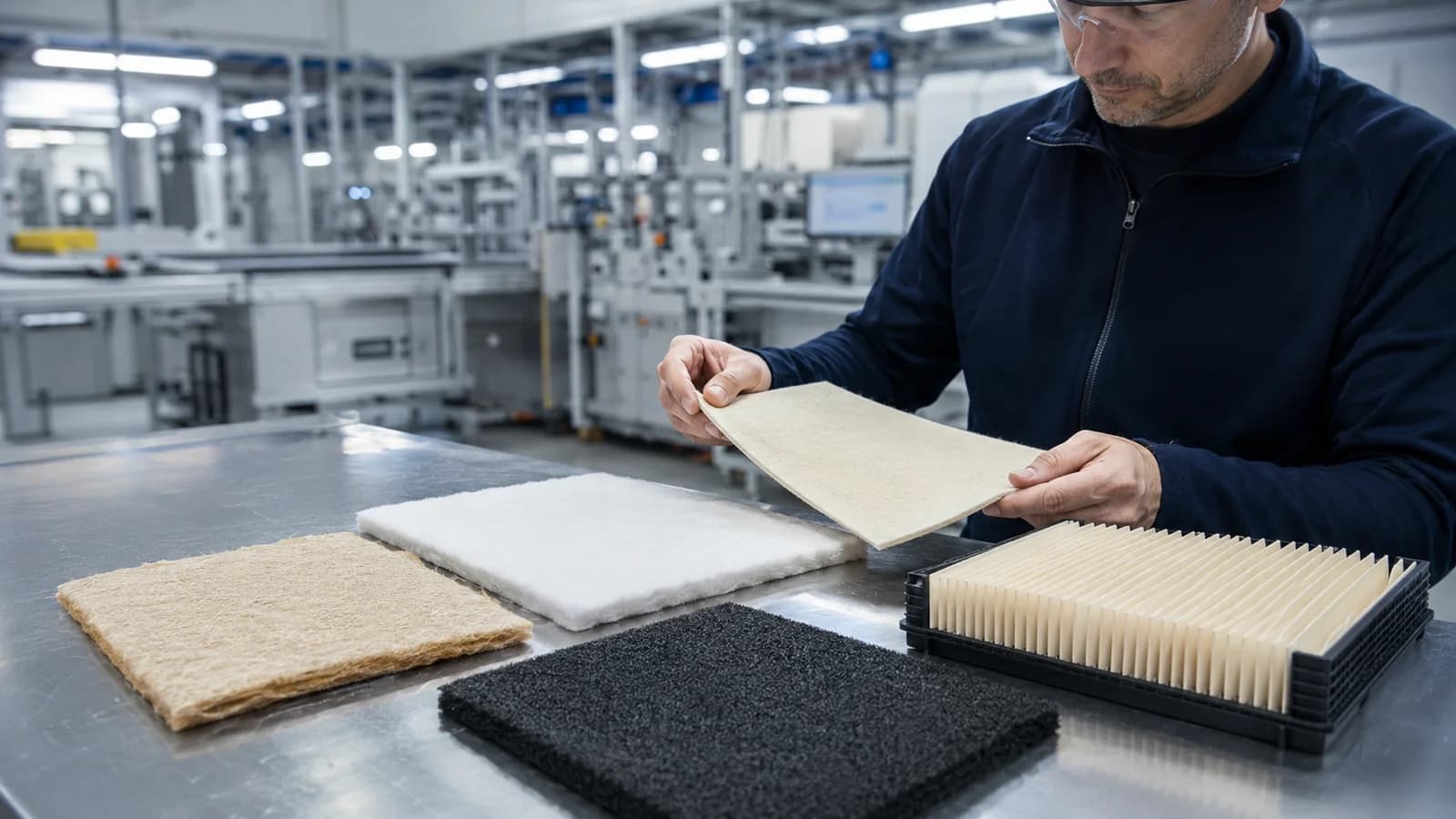
Filter media is the part of a filter that captures or adsorbs contaminants, but its material name is only one part of the product specification. The same broad media family can be produced with different fiber blends, basis weights, thicknesses, treatments, layer structures and pleating characteristics. Those differences can influence filtration, restriction, loading behavior and durability.
For a B2B buyer, media selection matters because the chosen structure must work inside a complete filter. The media has to operate with the frame, end caps, center tube, seals, adhesive, pleat geometry and available filter area. A technically suitable sheet can still produce an unsuitable filter if it is pleated too tightly, inadequately supported, poorly bonded or incorrectly sealed.
The central design trade-off is often described as efficiency versus restriction:
- Filtration efficiency describes how effectively a filter captures a defined contaminant under a stated test method.
- Restriction or pressure drop describes the resistance created as air or fluid passes through the filter at a defined flow condition.
- Dirt-holding or contaminant capacity describes how much defined test contaminant the filter can retain before reaching an agreed endpoint.
These characteristics are connected, but none should be judged in isolation. A denser structure may improve capture for a particular particle range while creating more initial restriction. A more open structure may reduce restriction but require additional filter area, another layer or a different fiber distribution to achieve the required efficiency. Loading behavior can also change the balance over time.
Buyers should therefore evaluate the complete filter design and the evidence behind it, not approve a product because a quotation says “synthetic,” “carbon,” “high efficiency” or “HEPA.” A useful material discussion connects the application, target performance, test method, filter construction and production controls.
Media terminology buyers should define first
Common automotive filter media terms do not all describe the same type of attribute. Some identify a raw-material family, some describe a manufacturing process and others describe a functional layer or performance classification.
| Term | What it generally describes | What the term does not prove by itself |
|---|---|---|
| Cellulose | A fiber composition based mainly on plant-derived pulp, often treated or blended for the intended use. | Efficiency, service interval, strength or suitability for a particular SKU. |
| Synthetic media | Media containing manufactured fibers such as polyester or polypropylene, sometimes used in a blend or composite. | A single construction, quality level or guaranteed performance advantage. |
| Melt-blown media | A nonwoven manufacturing process that forms fine thermoplastic fibers, often used as one layer in a composite. | HEPA performance, charge stability or suitability without support layers and test evidence. |
| Activated carbon media | A layer or structure containing activated carbon for adsorption of selected gases and vapors. | Universal odor removal, unlimited capacity or particulate efficiency without another filtration layer. |
| HEPA | A performance classification that must be connected to a defined standard, test condition and complete filter or system. | A specific fiber composition or verified performance based only on appearance or marketing language. |
This distinction prevents a frequent sourcing error: comparing a raw material, a process and a performance label as though they were mutually exclusive alternatives. A cabin filter, for example, may combine a support nonwoven, a melt-blown particulate layer and activated carbon. The commercial name should not replace the controlled construction and performance requirements.
Main automotive filter media types explained
Cellulose filter media
Cellulose media is made primarily from pulp fibers and is widely used across established automotive filtration applications. Depending on the design, the fibers may be refined, resin-treated, blended with other fibers or formed into a structure intended for pleating and fluid or air exposure.
Its advantages include established converting processes, broad material availability and the ability to meet many standard filtration requirements when the grade and filter design are correctly selected. Cellulose can be appropriate for volume aftermarket programs, conventional service conditions and specifications where its efficiency, restriction, capacity and durability are supported by relevant evidence.
Its limitations are application-specific rather than universal. Fiber structure, resin treatment and moisture or fluid exposure can affect strength and dimensional stability. A cellulose grade selected for an engine air filter should not automatically be assumed suitable for hot oil or a particular fuel. Higher basis weight also does not automatically mean better performance; fiber distribution, permeability, treatment, pleat design and available area matter.
Buyers should not classify cellulose as an inferior option. The correct question is whether the proposed grade and complete filter meet the approved application requirements. Request the material specification, applicable test evidence and change-control approach for the actual product program.
Synthetic filter media
Synthetic media is a broad term for structures containing manufactured fibers. Polyester, polypropylene and other polymers may be used, and the media may be woven, spunbonded, melt-blown or produced through another nonwoven process. Some automotive media uses synthetic fibers as one component of a cellulose-synthetic blend rather than as a fully synthetic sheet.
Manufactured fibers can offer useful control over fiber size, distribution and resistance to selected environmental conditions. Synthetic structures may be considered where a program requires fine-particle performance, a particular restriction target, moisture resistance, mechanical stability or longer-duration operation. The actual benefit depends on the polymer, fiber structure, layer arrangement and complete filter design.
“Synthetic” is not a performance specification. Two synthetic media grades can differ substantially in basis weight, thickness, permeability, efficiency, strength and compatibility. A poorly matched synthetic grade is not automatically better than a well-engineered cellulose grade. It may also need suitable support, bonding and pleat control to maintain its intended geometry.
Buyers should ask the supplier to identify the media construction precisely and explain why it fits the application. Any comparison with cellulose should use the same test method, flow condition, contaminant and acceptance criteria.
Melt-blown and nonwoven media
Nonwoven media is formed by bonding or entangling fibers rather than weaving or knitting them. Melt blowing is one nonwoven process: molten polymer is drawn into fine fibers and collected as a web. In automotive filtration, melt-blown material is often used as a fine-particle layer within a multilayer structure rather than as the complete load-bearing medium.
A composite may combine:
- A coarse upstream layer that intercepts larger particles.
- A fine-fiber or melt-blown layer that supports finer-particle capture.
- A downstream support layer that improves handling and pleat stability.
- An activated carbon layer when gas adsorption is required.
Some melt-blown layers use an electrostatic charge to support particle capture. If electrostatic performance forms part of the product claim, buyers should ask how it is evaluated, how storage and environmental exposure are considered, and whether the evidence applies to the media sheet or the finished filter.
Fine fibers can be mechanically delicate, so support and converting quality matter. Pleating, lamination, ultrasonic bonding, adhesive application and edge sealing can affect the finished structure. The appearance of a soft white layer does not establish fiber diameter, charge condition, efficiency or durability.
Melt-blown media may be relevant to cabin filtration and selected multilayer designs, but it should not be treated as a universal upgrade. Its value must be demonstrated within the complete filter under the intended test conditions.
Activated carbon media
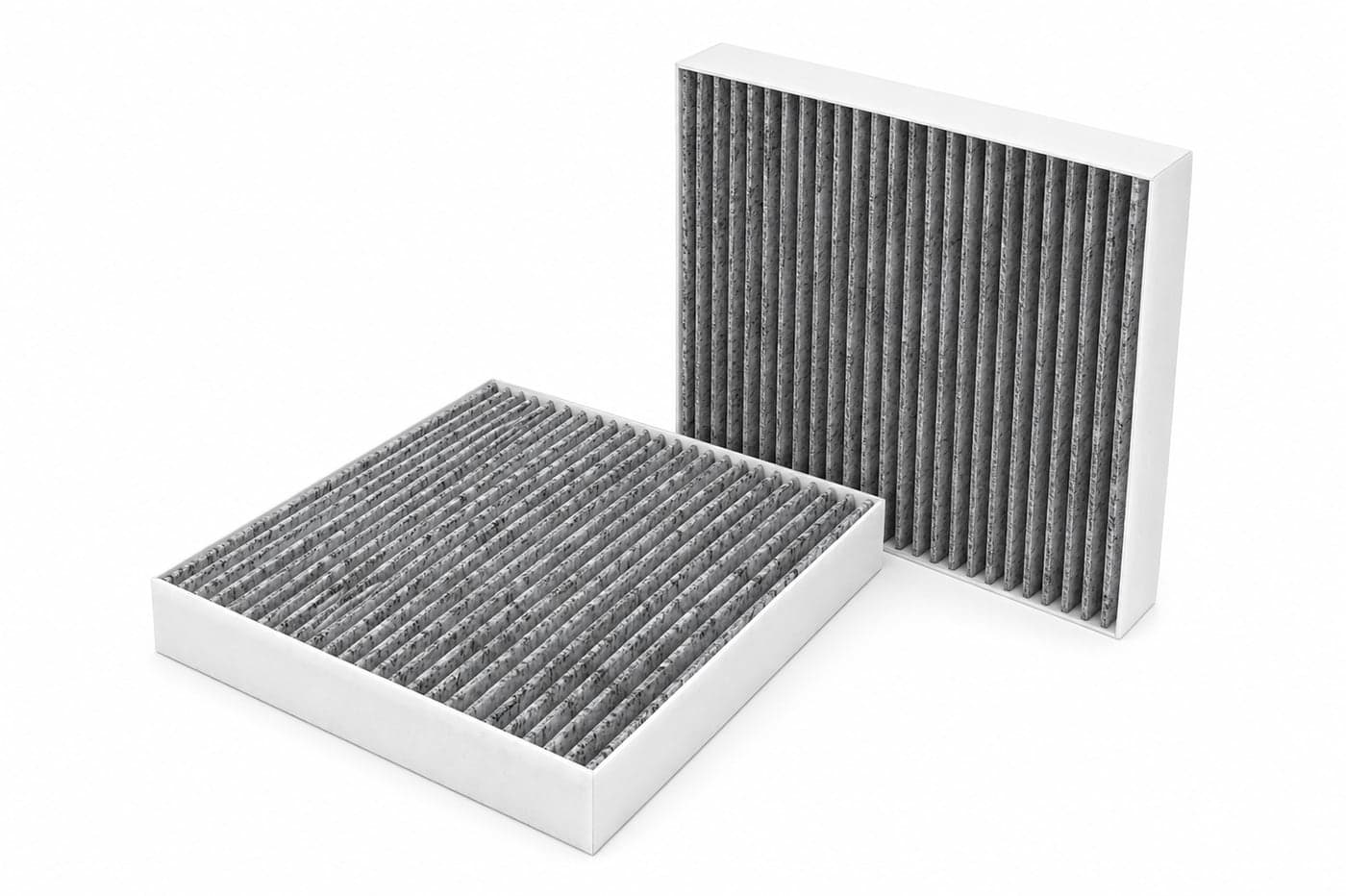
Activated carbon is used mainly in cabin filters to adsorb selected gases, vapors and odor-causing compounds. Adsorption occurs when molecules are retained on the carbon's internal surface. The result depends on the type and quantity of carbon, pore structure, layer construction, residence time, concentration, humidity, temperature and the compound being evaluated.
An activated carbon cabin filter normally still needs a particulate filtration structure. Carbon does not replace the layers required to capture dust, pollen and other particles. Likewise, adding a visibly dark layer does not prove adsorption capacity or performance against a particular gas.
Carbon capacity is finite. Once available adsorption sites are occupied, the layer cannot be assumed to keep delivering the same result. Service recommendations and product claims should therefore be linked to defined conditions rather than universal odor-removal promises.
Buyers evaluating carbon options should request the construction, carbon loading or another controlled specification where available, the target substances, the applicable test method and evidence from the finished filter or representative construction.
How filter media requirements differ by product category
The four main automotive filter families operate with different fluids, contaminants, flow conditions and structural risks. One generic “premium media” specification cannot describe them all.
| Filter type | Buyer concern | Media considerations | Evidence to request |
|---|---|---|---|
| Engine air filter | Airflow, dust capture, loading behavior, environmental exposure and sealing. | Fiber structure, treatment, permeability, pleat stability, filter area and compatibility with the frame and seal. | Application specification, efficiency and restriction results under a stated method, capacity evidence where required, dimensions and sample approval. |
| Cabin filter | Particulate capture, HVAC airflow and optional gas adsorption. | Support layers, fine-fiber or melt-blown layers, activated carbon where specified, pleat structure and finished-filter pressure drop. | Particulate test method, pressure-drop data, gas-filtration evidence for carbon claims and approved layer construction. |
| Oil filter | Lubricant compatibility, contaminant control, differential pressure and structural stability. | Fiber blend, resin system, pore structure, pleat support, bonding and behavior in the specified oil and temperature range. | SKU-specific compatibility and performance evidence, applicable efficiency/capacity method and construction approval. |
| Fuel filter | Fuel compatibility, particulate control, pressure conditions and separation requirements where applicable. | Material chemistry, fiber structure, seals and bonding, cleanliness, support and any water-separation function required by the application. | Fuel-specific method, particulate and differential-pressure evidence, separation evidence where required and material compatibility confirmation. |
Air filters
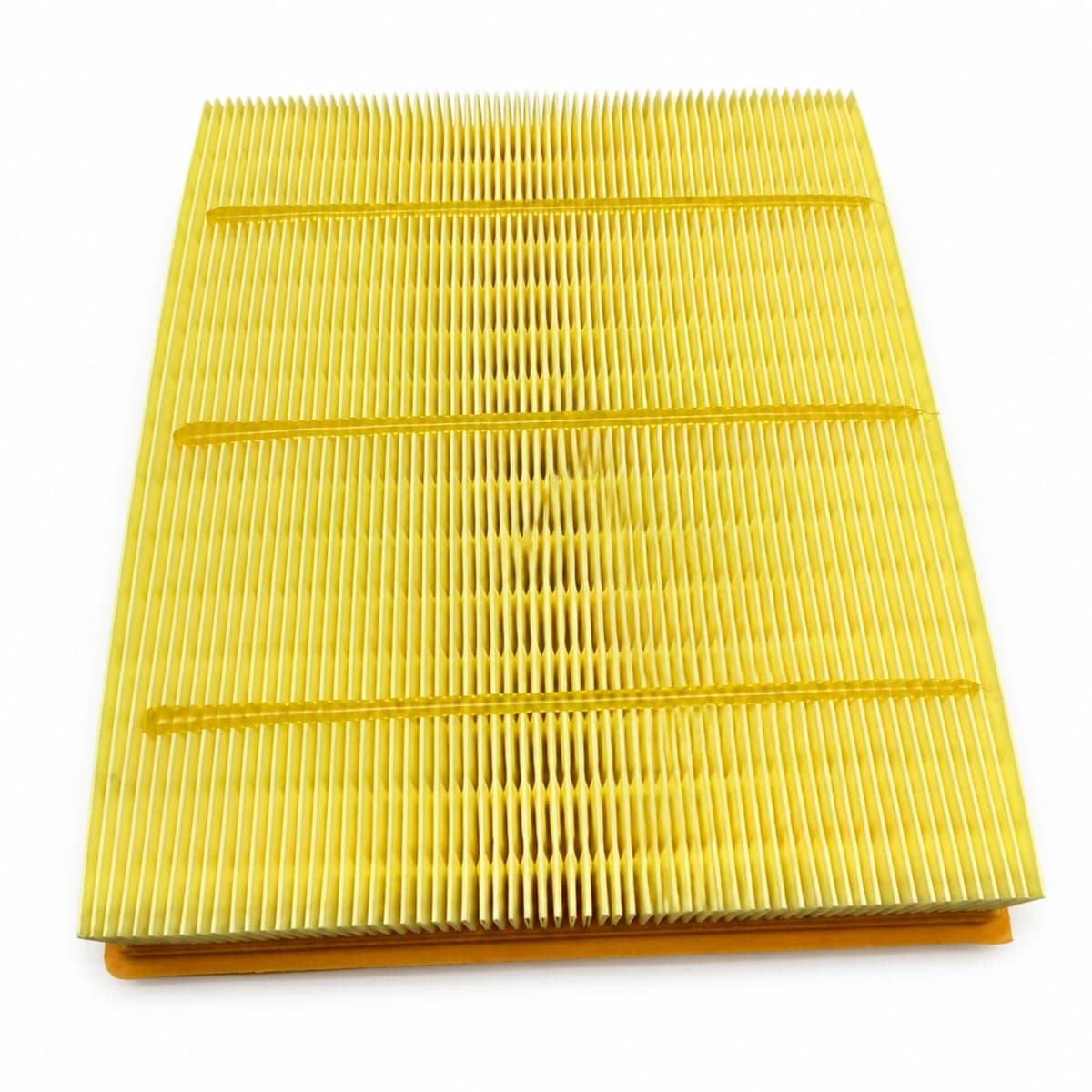
Engine air filter media should supply the required air while controlling dust ingress under the application's operating conditions. Buyers need to consider the target contaminant, airflow range, available filter area, housing geometry, humidity or temperature exposure and expected loading environment.
Media cannot compensate for an ineffective seal. Frame-to-media bonding, gasket geometry and installation fit are part of the filtration path. Pleat count should also be evaluated with pleat depth and spacing: adding pleats without adequate separation can restrict usable area or create contact between pleat faces.
For an air-filter program, ask for finished-filter evidence under the agreed method rather than relying only on a media data sheet. ISO 5011 describes performance testing for inlet air-cleaning equipment within its stated scope, but the applicable edition, procedure and acceptance values still need to be defined for the product.
Cabin filters
Cabin filter selection begins with the HVAC system and the buyer's intended product claim. A standard particulate filter, a fine-particle composite and an activated-carbon filter are different constructions serving different requirements.
A fine-fiber or melt-blown layer may support finer-particle capture, but the complete structure must preserve acceptable airflow and mechanical integrity. An activated carbon layer adds an adsorption function; it does not automatically improve particulate filtration. If a product is described as HEPA, the buyer should require the relevant classification method and finished-filter evidence rather than accept the term as a synonym for “premium.”
ISO/TS 11155-1 addresses particulate filtration for passenger-compartment air filters, while ISO 11155-2 addresses gas filtration within their respective scopes. Buyers should confirm which method, contaminant and test condition support each proposed claim.
Oil filters
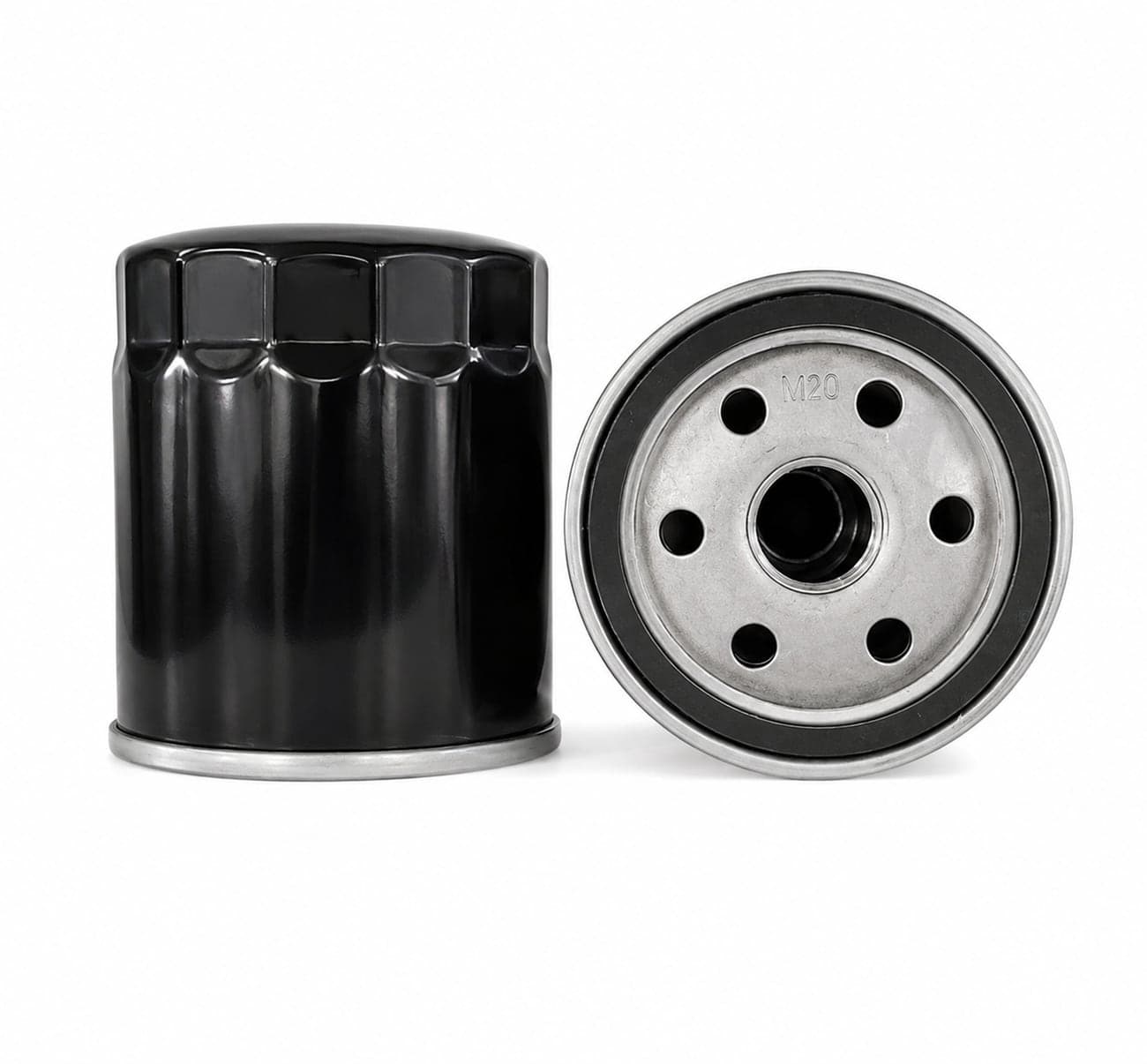
Oil filter media works in contact with lubricant, additives and changing temperature and differential-pressure conditions. The media and resin or bonding system must be considered together. Strength after exposure can matter as much as dry-sheet strength.
Cellulose, synthetic and composite constructions may each be suitable depending on the product. A synthetic component may support a particular efficiency, capacity or durability target, but the result depends on the total structure and available media area. Pleat support, center-tube design, end-cap bonding and bypass-system requirements also affect the finished filter.
The ISO 4548 series contains different methods for full-flow lubricating-oil filters. A buyer should identify the applicable method and request evidence connected to the approved SKU. A media specification alone does not confirm the performance of the complete oil filter.
Fuel filters
Fuel filter media must be selected for the specified fuel, contaminant-control objective and system conditions. Gasoline, diesel and alternative fuel applications may create different compatibility and separation requirements. Materials used in the media, seals, adhesives and housing all need to be considered.
Some applications require only particulate control; others may also require water separation or another function. A generic fine media is not proof of separation performance. Fiber surface properties, layer arrangement, flow direction and the finished separator design may all contribute.
ISO 19438 describes a multi-pass method for evaluating filtration efficiency, contaminant capacity and differential pressure for diesel and petrol filters within its scope. If water separation or another characteristic is required, the buyer should specify the appropriate method separately.
Key performance factors buyers should compare
Filtration efficiency
Filtration efficiency is meaningful only when it identifies the test method, contaminant, particle-size basis, flow condition and product state. A single percentage without these details cannot support a reliable comparison.
Buyers should also distinguish initial performance from performance during loading. Some filters change efficiency as contaminant accumulates. Results from a flat media sheet, an approved sample and a production filter are different types of evidence and should be labeled accordingly.
Pressure drop
Pressure drop is the resistance across the filter at a stated flow condition. The relevant target depends on the air or fluid system. Comparing two values is valid only when the test setup, flow, temperature or fluid and filter condition are aligned.
The objective is not simply the lowest possible pressure drop. Very low restriction can accompany insufficient capture, while excessive restriction can reduce available flow or cause other system effects. The specification should define an acceptable balance for the application and consider how restriction changes during loading.
Dirt-holding capacity
Dirt-holding or contaminant capacity helps describe loading behavior before a defined terminal condition is reached. Results depend on the test dust or contaminant, feeding procedure, flow, endpoint and filter design. They should not be translated directly into a universal service interval.
Operating environment matters. A filter used in a dusty region, a high-traffic urban environment or a controlled fleet may experience different contaminant profiles. Buyers can use capacity evidence to compare approved options under consistent conditions, then align service recommendations with application data and market requirements.
Mechanical strength
Media must survive conversion, assembly, transport and operation. Relevant characteristics may include tensile strength, burst or collapse resistance where applicable, pleat stability, resistance to cracking at fold peaks, layer bonding and dimensional stability after environmental or fluid exposure.
Finished-filter construction remains essential. Correct pleat spacing, adhesive continuity, end-cap bonding, frame support and sealing help preserve the intended flow path. Buyers should review material and finished-product evidence together.
Chemical and temperature compatibility
The media, treatment, adhesive and sealing materials should be compatible with the expected air, oil, fuel, moisture, temperature and storage conditions. Compatibility should be evaluated for the specific application rather than inferred from a generic polymer or fiber name.
Where severe or unusual conditions apply, buyers should define them during the enquiry. The supplier can then confirm whether supporting evidence exists, whether another construction is needed or whether additional validation should be agreed before approval.
Questions buyers should ask filter suppliers
A structured supplier discussion makes media comparisons more useful and reduces dependence on marketing labels. Ask the following questions for the proposed SKU or product family:
- What media type and layer structure are used? Request a precise description such as treated cellulose, cellulose-synthetic blend, supported melt-blown composite or carbon-containing cabin structure.
- What application was this construction designed for? Confirm filter category, vehicle or system, operating fluid, market conditions and intended service profile.
- Which specification controls the media? Ask for the relevant grade, basis weight, thickness, permeability or other agreed characteristics without assuming that every parameter is required for every design.
- Which test method supports the performance statement? The answer should identify the method, tested product, flow condition, contaminant and result format.
- Does the evidence apply to media or the finished filter? Sheet data can support material control, but finished-filter performance normally requires finished-filter evidence.
- How is production consistency monitored? Ask which incoming and in-process characteristics are checked and how lots are identified.
- How are material changes controlled? Clarify whether a fiber blend, supplier, treatment, layer or specification can change without buyer review.
- Are alternative media options available? Request the technical difference, intended application and evidence for each option rather than a simple economy/premium label.
- What are the known limitations? A credible proposal should state conditions not covered by the evidence and claims that still require validation.
- What sample approval record will be used? Link the approved media construction to the product code, packaging version and any agreed deviations.
Buyers can compare these answers with the supplier's broader manufacturing capability and quality information. Those pages provide context, but SKU-level material and performance evidence should still be confirmed for the proposed program.
Choosing filter media for private label programs
Private label buyers often need a product range that serves more than one channel or customer expectation. Media selection can support distinct program levels, but the differences should be technically defined and consistently communicated.
Standard range
A standard range can use proven constructions aligned with conventional applications and service expectations. Cellulose or blended media may be appropriate where the specified efficiency, restriction, capacity and durability are supported. “Standard” should not mean unreviewed or uncontrolled.
Premium range
A premium range may use a synthetic, composite, fine-fiber or activated-carbon construction to address a defined requirement. The upgrade should be linked to evidence such as a different efficiency target, adsorption function, loading characteristic, compatibility requirement or construction feature. A material name alone is not enough to justify the tier.
Application-specific products
Some products may need a dedicated construction because of dust exposure, HVAC requirements, fluid chemistry, temperature, service profile or separation function. These should be handled as application-specific specifications rather than forced into one global tier.
Before approving tier names or packaging claims, private label teams should align product management, purchasing, quality and marketing around the same controlled specification. The private label program provides the commercial workflow, while the automotive filtration supply solutions page shows how product, manufacturing and export considerations connect.
Differentiation should remain traceable through the product code, approved sample, bill of material, artwork and change record. This helps prevent a premium claim from remaining on the box after the underlying construction changes.
Automotive filter media selection checklist
Before approving a filter specification, buyers should confirm:
- Application requirements: Filter category, vehicle or system, operating fluid, target market, environmental conditions and intended service profile are documented.
- Media specification: Composition, layer structure and the characteristics needed to identify the approved grade are recorded.
- Complete filter design: Media area, pleat geometry, support, bonding, frame, seals and other relevant components are reviewed together.
- Test requirements: Efficiency, pressure drop, capacity, adsorption, compatibility or separation requirements are connected to stated methods and acceptance criteria.
- Supplier documentation: Media data, finished-filter evidence, batch identification and limitations are clearly distinguished.
- Sample approval: The approved sample and media construction are linked to the correct SKU and packaging version.
- Production consistency: Incoming checks, process controls and lot records are defined for the characteristics that matter.
- Change control: Alternative materials, suppliers or layer structures require the agreed review and approval before use.
- Claims alignment: Standard, premium, carbon, fine-particle or HEPA-related language is supported by the approved specification and evidence.
- Open items: Missing evidence, deviations and additional validation remain visible until resolved.
Buyers can review Beling's complete automotive filter product portfolio and then send the target product list, intended media level and required evidence for feasibility review. A useful enquiry should identify the requirement to be confirmed rather than assume that one media construction fits every SKU.
Important note on test standards and evidence
The standards referenced in this guide identify possible methods for defined product categories. Their inclusion does not state that Beling, a facility or an individual SKU is certified, accredited or tested to every standard listed. Buyers should confirm the applicable edition, scope, test laboratory, product identity and acceptance criteria before relying on a report.
- ISO 5011:2025 — Inlet air-cleaning equipment performance testing
- ISO/TS 11155-1:2001 — Passenger-compartment particulate filtration
- ISO 11155-2:2009 — Passenger-compartment gas filtration
- ISO 4548-12:2017 — Full-flow lubricating-oil filter efficiency testing
- ISO 19438:2023 — Diesel and petrol fuel-filter efficiency testing
The relevant method should be selected for the product and decision being made. A standard number in a catalog or quotation is not a substitute for traceable, SKU-specific evidence.
Related products
Continue to product scope.
Air Filters
Review category capability and available product records.
Cabin Filters
Review category capability and available product records.
Oil Filters
Review category capability and available product records.
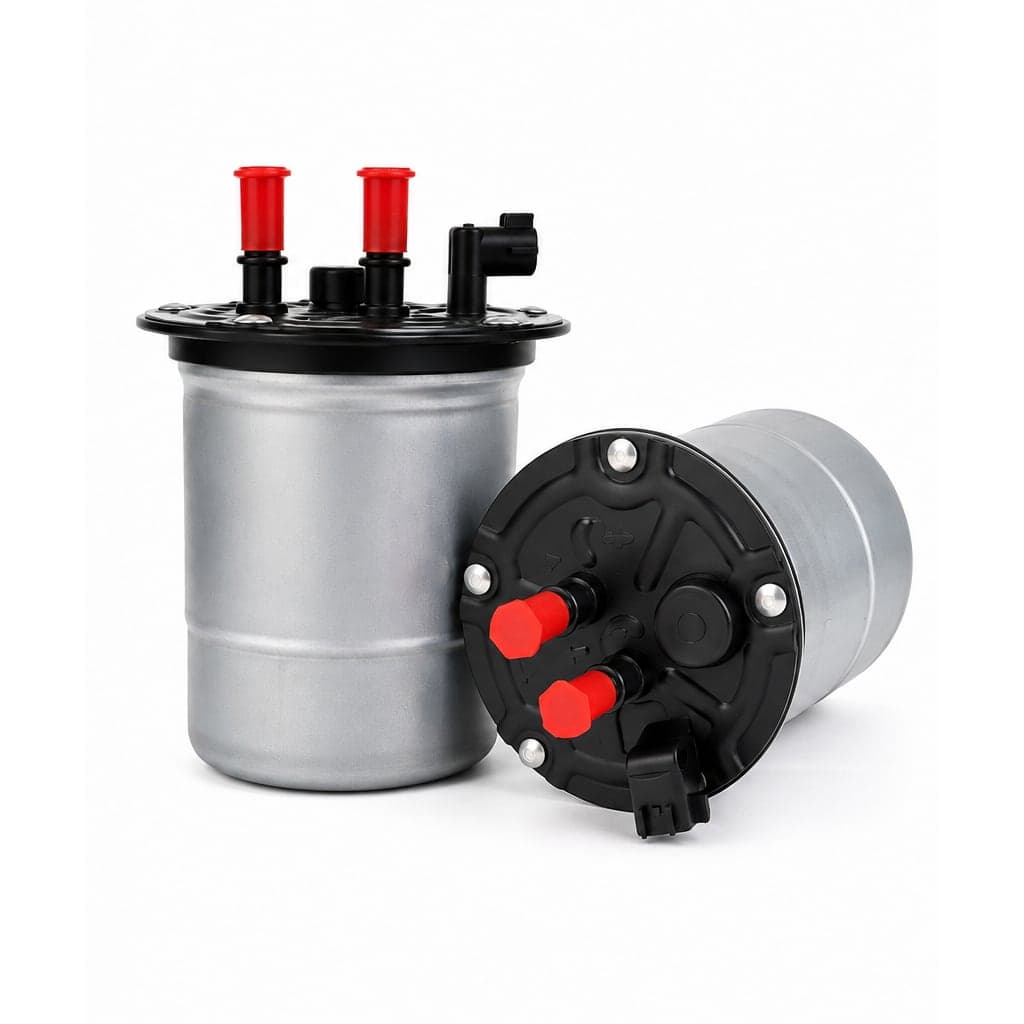
Fuel Filters
Review category capability and available product records.
No SKU page is linked until it passes the existing publication, verification and indexing gates. Use the category page or send a product list for review.
FAQ
Questions from aftermarket buyers.
Next step
Move from research to a reviewed filter program.
Sources and review
- Beling Automotive Filter Products — Beling Automotive Filters
- Beling Quality Information — Beling Automotive Filters
- Beling Manufacturing Capability — Beling Automotive Filters
- Beling Private Label Program — Beling Automotive Filters
- Beling RFQ Requirements — Beling Automotive Filters
- ISO 5011:2025 — Inlet air cleaning equipment performance testing — International Organization for Standardization
- ISO/TS 11155-1:2001 — Passenger-compartment particulate filtration — International Organization for Standardization
- ISO 11155-2:2009 — Passenger-compartment gas filtration — International Organization for Standardization
- ISO 4548-12:2017 — Lubricating-oil filter efficiency testing — International Organization for Standardization
- ISO 19438:2023 — Fuel-filter efficiency testing — International Organization for Standardization
Reviewed by Beling Automotive Filters (Organization review) on August 21, 2026.