
Product Guides
Cabin Filter Sourcing Guide: Particulate, Carbon and Range Planning
A B2B buyer guide to cabin filter sourcing guide, supplier evidence, decision controls and RFQ preparation for automotive aftermarket programs.
Answer first
Answer first
Cabin Filter Sourcing Guide: Particulate, Carbon and Range Planning should be evaluated as a controlled buyer decision, not as a generic supplier claim. Buyers should define configuration, review fit and construction, confirm performance evidence and document range planning. The exact requirements and evidence depend on the filter category, SKU, application, market, packaging and contract.
Key facts
Key points for buyer review
- Configuration: Distinguish particulate, activated-carbon and multilayer options through controlled specifications.
- Fit and construction: Review dimensions, frame, pleats, airflow direction and sealing features for the application.
- Performance evidence: Match particulate or gas-phase claims to applicable methods, conditions and product construction.
- Range planning: Choose configurations and SKUs according to market positioning, climate, demand and packaging needs.
The buyer decision behind this topic
Cabin Filter Sourcing Guide: Particulate, Carbon and Range Planning should be evaluated as a controlled buyer decision, not as a generic supplier claim. Buyers should define configuration, review fit and construction, confirm performance evidence and document range planning. The exact requirements and evidence depend on the filter category, SKU, application, market, packaging and contract.
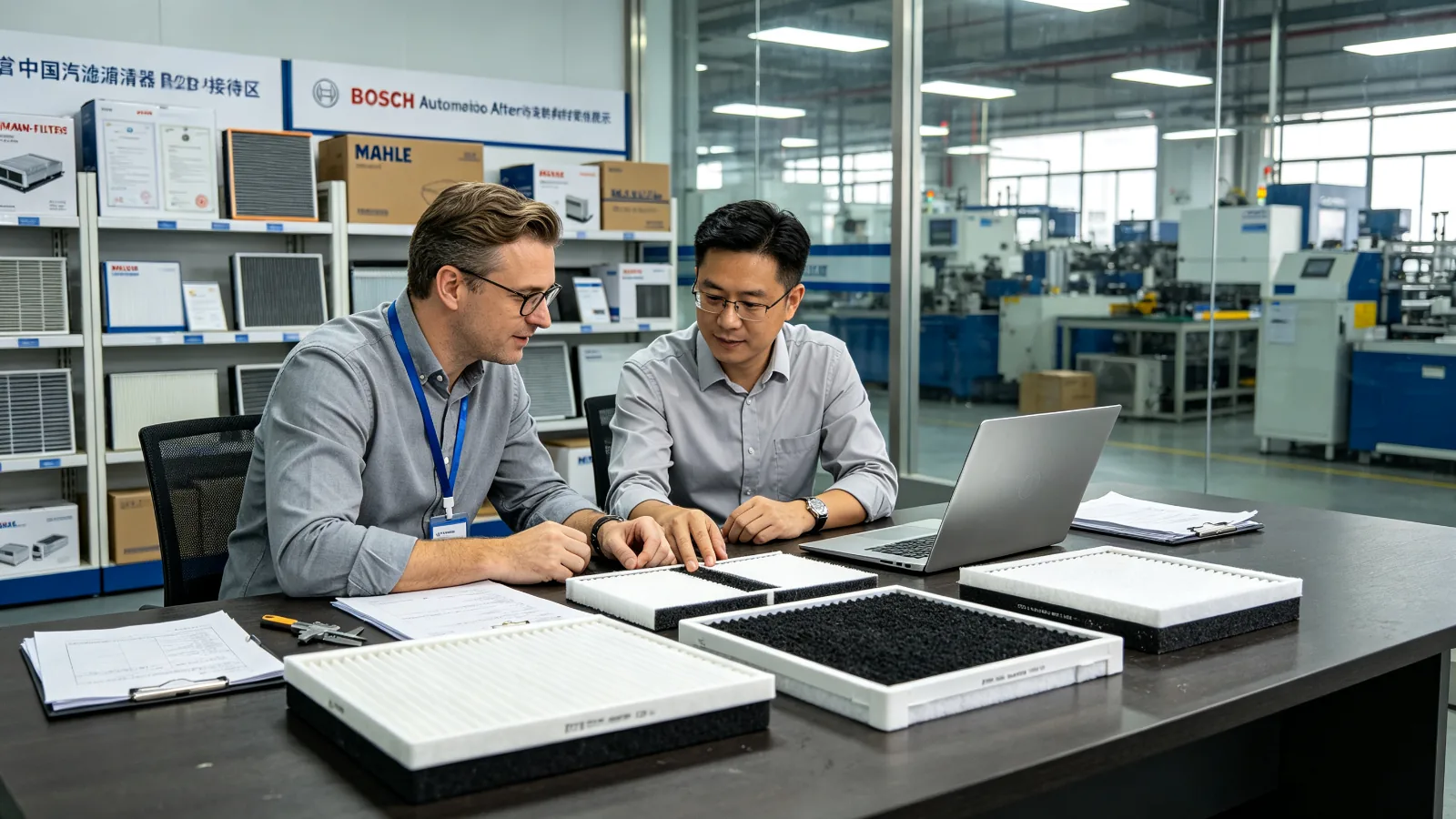
Cabin filter sourcing begins by distinguishing particulate, activated-carbon and multilayer configurations. Buyers should then review fit, airflow direction, frame and sealing, media construction, applicable performance evidence and the market role of each SKU.
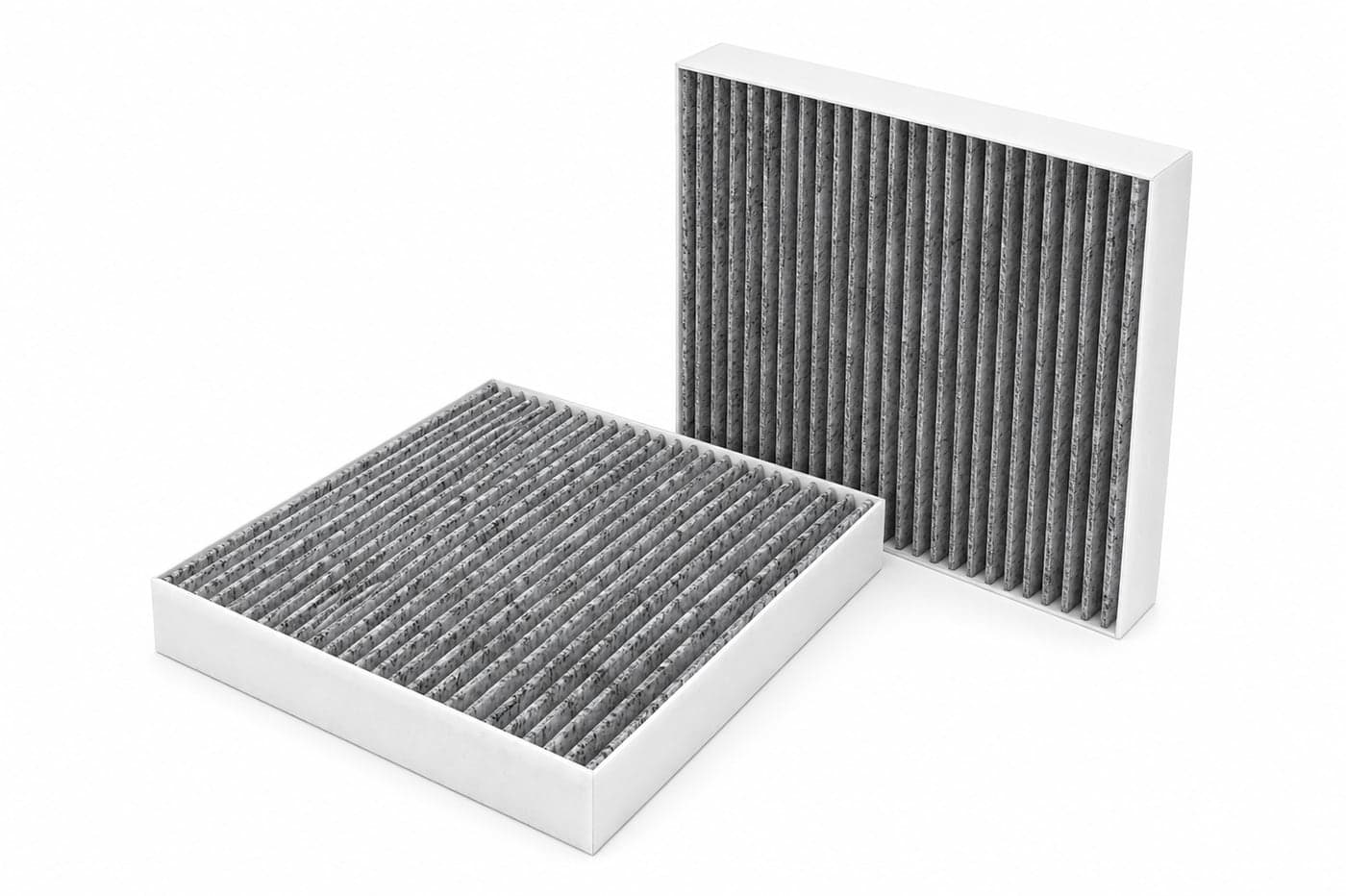
Activated carbon has finite adsorption capacity and does not replace particulate filtration. HEPA terminology, odor claims and efficiency values should be tied to a defined construction, method and condition.
Key factors buyers should evaluate
Configuration
Distinguish particulate, activated-carbon and multilayer options through controlled specifications. Buyers should convert this consideration into a written requirement, identify who owns the decision and ask for evidence that represents the proposed product or program. A general capability statement is useful for screening, but approval should depend on information relevant to the actual order.
Fit and construction
Review dimensions, frame, pleats, airflow direction and sealing features for the application. Buyers should convert this consideration into a written requirement, identify who owns the decision and ask for evidence that represents the proposed product or program. A general capability statement is useful for screening, but approval should depend on information relevant to the actual order.
Performance evidence
Match particulate or gas-phase claims to applicable methods, conditions and product construction. Buyers should convert this consideration into a written requirement, identify who owns the decision and ask for evidence that represents the proposed product or program. A general capability statement is useful for screening, but approval should depend on information relevant to the actual order.
Range planning
Choose configurations and SKUs according to market positioning, climate, demand and packaging needs. Buyers should convert this consideration into a written requirement, identify who owns the decision and ask for evidence that represents the proposed product or program. A general capability statement is useful for screening, but approval should depend on information relevant to the actual order.
Buyer decision table
| Review area | Buyer question | Evidence or output |
|---|---|---|
| Configuration | Distinguish particulate, activated-carbon and multilayer options through controlled specifications. | Approved requirement, relevant record and open-item status |
| Fit and construction | Review dimensions, frame, pleats, airflow direction and sealing features for the application. | Approved requirement, relevant record and open-item status |
| Performance evidence | Match particulate or gas-phase claims to applicable methods, conditions and product construction. | Approved requirement, relevant record and open-item status |
| Range planning | Choose configurations and SKUs according to market positioning, climate, demand and packaging needs. | Approved requirement, relevant record and open-item status |
Compare particulate function, carbon layer where applicable, fit, airflow, evidence and tier position as separate decisions. Relevant product-family requirements can be reviewed through the air filter, cabin filter, oil filter and fuel filter category pages.
Specify a cabin filter program
1. Identify application and orientation
Confirm reference source, dimensions, airflow direction and installation features.
2. Choose the configuration
Define particulate, carbon or multilayer construction based on the intended program.
3. Review fit and structure
Check frame stiffness, edge sealing, pleat stability and handling resistance.
4. Evaluate evidence
Separate particulate and gas-phase evidence and read each under its method and conditions.
5. Plan the range
Assign standard or upgraded configurations by validated SKU demand and packaging needs.
Cabin filter specification evidence
Depending on the product and decision, buyers can request:
- Dimensions, orientation and application input.
- Layer and media construction description.
- Frame, edge and pleat acceptance criteria.
- Applicable particulate or gas-phase report.
- Identified sample, packaging and range-tier approval.
A carbon color or layer name cannot establish adsorption performance. Buyers should verify the controlled construction and evidence relevant to the intended claim.
Cabin filter selection risks
Configuration confusion. Particulate and carbon variants share a reference but are not distinguished.
Unsupported HEPA claim. A marketing term appears without method or finished-filter evidence.
Airflow orientation error. Packaging or product marking does not clearly support installation.
Range duplication. Multiple tiers are added without a controlled technical distinction.
Buyer checklist
Before approving the next step, confirm:
- Configuration has a defined requirement, owner and approval status.
- Fit and construction has a defined requirement, owner and approval status.
- Performance evidence has a defined requirement, owner and approval status.
- Range planning has a defined requirement, owner and approval status.
- Product, packaging and commercial revisions are aligned.
- Evidence applies to the proposed SKU, batch or program scope.
- Deviations, limitations and assumptions remain visible.
- The next approval gate and change-notification rule are documented.
Related buyer resources
- Review the cabin filter category when preparing the decision.
- Review the automotive filter media selection guide when preparing the decision.
- Review the private label program when preparing the decision.
- Review the request-for-quotation page when preparing the decision.
- Review the automotive filter product portfolio when preparing the decision.
- Review the quality information when preparing the decision.
- Review the manufacturing capability when preparing the decision.
Discuss your product list and requirements
Send cabin-filter references, desired configurations, market, quantities and packaging through the cabin filter enquiry. Confirm each configuration and sample before range approval.
Related products
Continue to product scope.
No SKU page is linked until it passes the existing publication, verification and indexing gates. Use the category page or send a product list for review.
FAQ
Questions from aftermarket buyers.
Next step
Move from research to a reviewed filter program.
Sources and review
- Cabin Filter Product Category — Beling Automotive Filters
- Private Label Program — Beling Automotive Filters
- RFQ Requirements — Beling Automotive Filters
- Automotive Filter Product Portfolio — Beling Automotive Filters
- Quality Information — Beling Automotive Filters
- Manufacturing Capability — Beling Automotive Filters
Reviewed by Beling Automotive Filters (Organization review) on August 22, 2026.